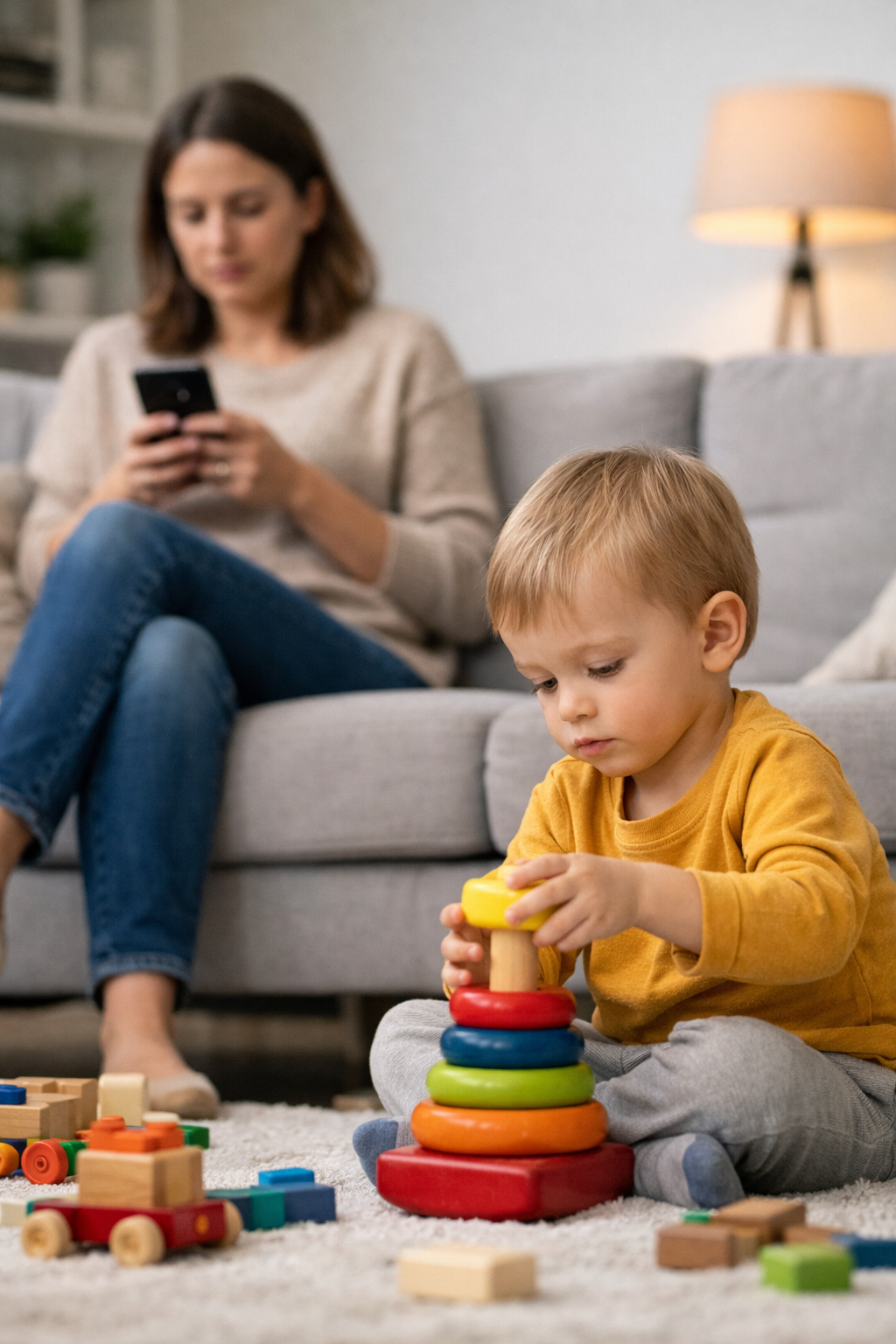
What Happens When Parents Look at Their Phones Instead of Their Children
What a Study of 56,000 Children Reveals About Parental Phone Distraction
In today’s world, most parents want to be present with their children. But even with the best intentions, our phones often sneak into the moments that matter most.
Researchers are beginning to study this phenomenon, sometimes called “parental phubbing”—when a parent looks at their phone instead of engaging with their child.
A large meta-analysis reviewing 42 studies and more than 56,000 children found that when parents frequently use their phones during time with their kids, children show higher rates of emotional problems and behavioral challenges, including hyperactivity and impulsivity.
Researchers also found that when parents are often distracted by their phones, children may struggle more with social skills and may feel less confident about themselves.
You can read the study here: Parental Phubbing and Child Social-Emotional Adjustment: A Meta-Analysis of Studies Conducted in Chinahttps://pubmed.ncbi.nlm.nih.gov/37877136/
This doesn’t mean parents are doing anything wrong. Parenting today comes with constant notifications, emails, texts, and demands pulling at our attention.
But the research reminds us of something powerful.
Children don’t need perfect parents. They need present ones.
Eye contact. Play. Conversation. Shared experiences.
These simple moments help children build attention, emotional regulation, and connection.
And the good news is that even small changes, like putting phones away during playtime or family activities, can create more space for those moments to happen.
Because when parents and children are fully present together, something important grows. Connection.
At The Perch Academy, we are focused on facilitating that screen-free family connection, centered around athletic play and creative arts. We are multigenerational so that both parents and grandparents can laugh, play and enjoy that connection.